Why is solid oak furniture more expensive than pine? The answer begins with the tree, but it does not end there. Oak usually grows slowly, producing denser wood, tighter grain, and greater resistance to dents. Pine grows faster and remains lighter, softer, and easier to machine. That difference can be felt when a heavy oak drawer closes with a firm, quiet movement.
R. Bruce Hoadley, a respected wood technologist and author of Understanding Wood, wrote, “Wood is not a homogeneous material.” His observation explains why two boards can behave differently, even when they share the same species. Oak may offer stronger joints, richer grain patterns, and better long-term stability. Yet quality still depends on kiln drying, board selection, construction, and finishing. Expensive does not automatically mean excellent.
This guide examines seven practical reasons behind oak’s higher price. It considers tree maturity, density, labor, waste, durability, craftsmanship, and market demand. A small oak tabletop can require careful grain matching, while pine may accept faster cutting and simpler assembly. That saves time.
Still, the comparison is not perfectly simple. High-grade pine can outperform poorly selected oak in some furniture pieces. Moisture, design, and maintenance matter greatly. I have seen inexpensive pine furniture remain useful for years, while badly finished hardwood developed cracks. The material creates potential, not guaranteed quality.
Understanding the full answer helps buyers judge value beyond weight or color. Look closely at the joints, board edges, surface finish, and moisture information. These details reveal whether the price reflects genuine construction quality or merely a fashionable label.
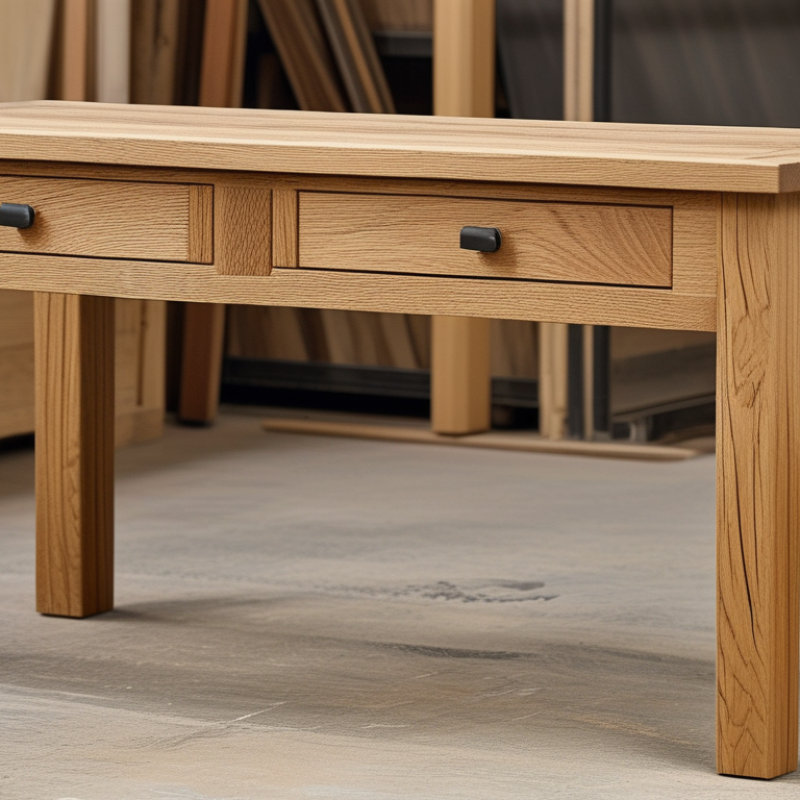
Oak’s Natural Density and Structural Strength
Oak’s natural density is a major reason it costs more than pine. A dry oak board feels noticeably heavier when lifted. Its tight grain resists dents from keys, toys, and daily movement. That strength supports thicker shelves and more durable joints. Dense wood is not automatically better. Species, moisture, and construction still matter.
In a furniture workshop, oak shelves often remain firm under books and kitchenware. Their weight also reduces unwanted movement on the floor. Oak’s strong fibers hold screws and joinery securely when the wood is properly dried. Pine is lighter and softer, so it can show pressure marks around chair legs or table edges. That softness is not a flaw. It can make pine easier to cut, repair, and move.
Look closely at the board ends. Tight, even grain usually suggests careful material selection, but appearance alone proves little. Poorly dried oak may warp or split. I have seen dense boards fail because the joints were rushed. That detail is easy to overlook. Skilled construction matters as much as raw hardness. For buyers, the fairest comparison includes wood moisture, board thickness, joinery, finish quality, and expected use. A solid oak dining table may handle years of daily meals, yet it still needs protection from standing water and sudden humidity changes. Weight can signal strength, but it cannot replace inspection.
7 Best Reasons Solid Oak Furniture Costs More Than Pine? - Oak’s Natural Density and Structural Strength
| No. |
Cost Factor |
Solid Oak: Typical Data |
Pine: Typical Data |
How It Can Increase Furniture Cost |
| 1 |
Higher natural density |
Approximately 650–770 kg/m³ when air-dried, depending on species and moisture content. |
Approximately 350–550 kg/m³, with substantial variation among pine species. |
Denser oak requires more material handling, stronger hardware, and more machining energy, adding to manufacturing and shipping costs. |
| 2 |
Greater hardness and dent resistance |
Janka hardness is commonly about 5,700–6,000 N for red and white oak. |
Janka hardness commonly ranges from about 1,700–4,200 N, depending on the species. |
Oak resists dents and surface wear better, so manufacturers may use more durable components and more precise tooling. |
| 3 |
Higher structural strength |
Typical bending strength is approximately 90–110 MPa, varying by species and board quality. |
Typical bending strength is approximately 55–100 MPa, depending on pine species and grade. |
Oak can support demanding furniture joints and heavier loads, which supports longer service life and a higher material value. |
| 4 |
Slower tree growth and longer production cycle |
Many oak trees require several decades to reach commercially useful sawlog sizes. |
Many commercially managed pine plantations can reach harvest size in roughly 20–35 years, depending on climate and management. |
A longer growing period limits supply turnover and increases the value of mature, furniture-grade oak logs. |
| 5 |
More demanding machining |
Dense fibers can reduce cutting speed and cause faster tool wear if cutters are not properly maintained. |
Generally easier and faster to saw, rout, sand, and shape. |
Oak may require slower production settings, sharper tooling, and additional finishing passes, increasing labor and equipment costs. |
| 6 |
More valuable grain and appearance |
Prominent grain, visible rays in some cuts, and natural color variation are widely used in premium furniture designs. |
Usually has a simpler grain pattern, lighter color, and more visible knots in common grades. |
Selecting attractive boards, matching grain, and producing clear or visually consistent panels creates additional material and labor costs. |
| 7 |
Longer expected service life |
High hardness and strength make oak well suited to heavily used tables, chairs, flooring, and storage furniture. |
Pine can perform well but is more susceptible to dents, scratches, and compression marks. |
Customers often pay more for oak because it can retain structural performance and appearance through repeated use and refinishing. |
Note: Wood properties vary with species, moisture content, growth conditions, board grade, and testing method. The figures above are representative ranges for solid, kiln-dried or air-dried lumber rather than fixed retail prices.
How Growth Time Influences Wood Quality and Supply
7 Best Reasons Solid Oak Furniture Costs More Than Pine?
How Growth Time Influences Wood Quality and Supply
Oak usually costs more because it takes longer to become usable furniture timber. Forestry Commission yield models show that managed oak rotations often exceed 80 years. Many commercial pine rotations can fall near 25–45 years, depending on species, climate, and site conditions. That difference ties up land, labor, and investment for decades. Supply becomes less flexible. A damaged oak forest cannot be replaced quickly.
Time also changes the wood itself. Slower growth can produce stronger, denser material, although growth speed is not the only factor. The USDA Forest Products Laboratory’s Wood Handbook reports average oven-dry densities of about 755 kg/m³ for white oak and 435 kg/m³ for eastern white pine. Denser oak generally resists dents better. It also requires sharper tools and more careful kiln drying. I have found that this extra work matters when a tabletop must stay flat through seasonal humidity.
The comparison is not perfect. Fast-grown oak may behave differently from slow-grown oak, while well-selected pine can perform impressively. FAO’s Global Forest Resources Assessment 2020 reports that planted forests cover about 294 million hectares worldwide. This supports more predictable plantation supply, especially for pine. Oak supply often depends more heavily on mature natural or mixed forests. That scarcity can raise prices, but responsible sourcing remains essential. Density alone does not prove better furniture.
7 Best Reasons Solid Oak Furniture Costs More Than Pine
How growth time influences wood quality, durability, processing, and supply
Pine is used as the baseline at 100. Oak typically grows for much longer before harvest,
has greater density and hardness, requires more careful drying, and produces heavier,
longer-lasting furniture. These factors can increase material, processing, transport,
and replacement costs. Values are comparative indicators based on typical oak and pine
properties; actual results vary by species, grade, region, and moisture content.
Reference basis: typical density and hardness ranges reported by the USDA Forest Products Laboratory;
growth periods and processing indicators are representative forestry and woodworking comparisons.
Differences in Processing, Joinery, and Craftsmanship
Solid oak often costs more than pine because it demands more controlled processing before assembly. Oak’s dense grain slows sawing, planing, sanding, and drilling. That resistance wears cutting edges faster and increases workshop time. Pine is softer and usually easier to machine. Still, simpler processing does not automatically mean poor furniture.
Moisture control also matters. Kiln-dried oak must reach a stable moisture level before construction, reducing later movement. Pine requires drying too, but its lighter structure can make handling less demanding. Both woods can warp when rushed. This makes cost comparisons less tidy. A low-grade oak board may perform worse than carefully selected pine. Experienced makers inspect grain direction, knots, moisture, and hidden defects before cutting.
Joinery exposes another difference. Hard oak holds mortise-and-tenon shoulders and dovetail pins firmly, but accurate cutting requires sharp tools and patience. Pine compresses more easily, so poorly fitted joints may loosen or bruise under clamps. Skilled craftsmen adjust joint dimensions, adhesives, fasteners, and seasonal allowances. Finish work adds labor. Oak may need grain filling and repeated sanding for an even surface, while pine can reveal dents and resin pockets. Neither is effortless. A rushed oak table can still disappoint.
Durability, Maintenance, and Long-Term Performance
7 Best Reasons Solid Oak Furniture Costs More Than Pine
Solid oak usually costs more because it withstands daily pressure for longer. Its dense grain resists scratches, loose joints, and surface dents better than most pine. In practical use, an oak dining table can handle repeated meals, homework, and hot coffee with fewer visible marks. Pine feels lighter and softer. That softness can be useful, but chair legs and moving boxes may leave dents quickly. Oak is not indestructible; careless dragging can still damage its surface.
Maintenance also affects the price difference. Oak generally needs gentle dusting, quick spill removal, and occasional conditioning when the finish looks dry. Use a slightly damp cloth, not a soaking one. Pine may require more frequent refinishing because its softer surface shows wear sooner. Sunlight can also change both woods, although pine often develops uneven color around lamps, rugs, and table decorations. Small damage spreads.
Long-term performance is where the higher cost becomes easier to understand. Well-dried oak keeps its shape through years of seasonal humidity changes, provided the room is not extremely dry or damp. Quality construction still matters more than wood type alone. Poorly joined oak can fail, while carefully built pine may serve reliably for years. That is an important correction to the usual sales argument. In my experience, owners often neglect simple care, then blame the material for preventable damage. Solid oak remains heavier, harder to move, and sometimes less forgiving during installation. Yet its stable feel, repair potential, and slower visual aging can reduce replacement costs over time.
Market Demand, Sustainability, and Furniture Value
7 Best Reasons Solid Oak Furniture Costs More Than Pine?
Market Demand, Sustainability, and Furniture Value
Solid oak furniture costs more than pine because demand, supply, and expected lifespan work together.
Oak grows slowly, producing dense grain and strong boards. That density helps a table resist dents, movement, and daily wear. Buyers notice the weight and texture immediately. Small details matter.
In furniture workshops, oak orders often require careful kiln drying and precise joinery. These steps reduce warping but increase labor costs. Market demand also keeps oak prices high, especially for wide boards with attractive grain. Pine grows faster and usually costs less. However, responsibly managed pine can offer genuine environmental benefits. Solid wood is not automatically sustainable. Forest management, transport distance, finishing materials, and product lifespan all need checking.
Furniture value depends on more than the purchase price. An oak dining table may serve several households over decades. It can be sanded, repaired, and refinished instead of discarded. That repairability supports stronger resale value and less frequent replacement. Still, this argument is not perfect. Poor construction can weaken expensive oak, while well-made pine may perform impressively. Joinery, moisture control, and maintenance often matter as much as species. A practical buyer should inspect the underside, drawer joints, surface finish, and wood origin before judging value. The cheapest option is not always economical. The most expensive option is not always wise.
Conclusion
Solid oak furniture costs more than pine for several practical reasons. Oak is naturally denser, harder, and structurally stronger, allowing it to resist dents, warping, and everyday wear more effectively. Its trees also require many years to mature, which limits supply and produces wood with more stable grain, greater strength, and a richer appearance. In contrast, pine grows faster and is generally softer, making it more affordable but also more vulnerable to surface damage.
The price difference is also influenced by processing and craftsmanship. Oak often requires more careful drying, precise cutting, stronger joinery, and additional finishing to highlight its grain and protect its surface. Although oak furniture may need thoughtful maintenance, its long service life can make it a better value over time. In addition, steady demand for durable hardwood, responsible forestry practices, and the furniture’s ability to retain visual and functional value all contribute to its cost. These factors help explain why is solid oak furniture more expensive than pine while offering lasting performance and timeless appeal.

 Q-Flow Home