A bed that slides across hardwood can turn a quiet night into a series of small, irritating adjustments. The frame may shift when you sit on the edge, climb in, or turn over. Even a few inches can scrape the floor or pull a nightstand out of place. The cause is often simple: smooth floor finishes offer little grip, while narrow feet concentrate the bed’s weight. Dust, uneven legs, loose joints, and restless movement can make the problem worse.
It is tempting to blame the floor alone, but the frame’s condition matters too. A wobbly corner or missing foot pad may keep even a heavy bed from sitting steadily. How to prevent a bed frame from sliding on hardwood floors depends on identifying what is moving before adding a fix. This guide explains how to check the frame, compare non-slip pads and rug grippers, and choose a solution that protects the floor. Small details matter. Measure each leg, clean the contact points, and test the bed gently after fitting a grip. Some fixes work better than others, and a thick pad can raise the frame unevenly. That is easy to overlook. With a careful check and the right materials, most beds can stay put without scratching the hardwood.
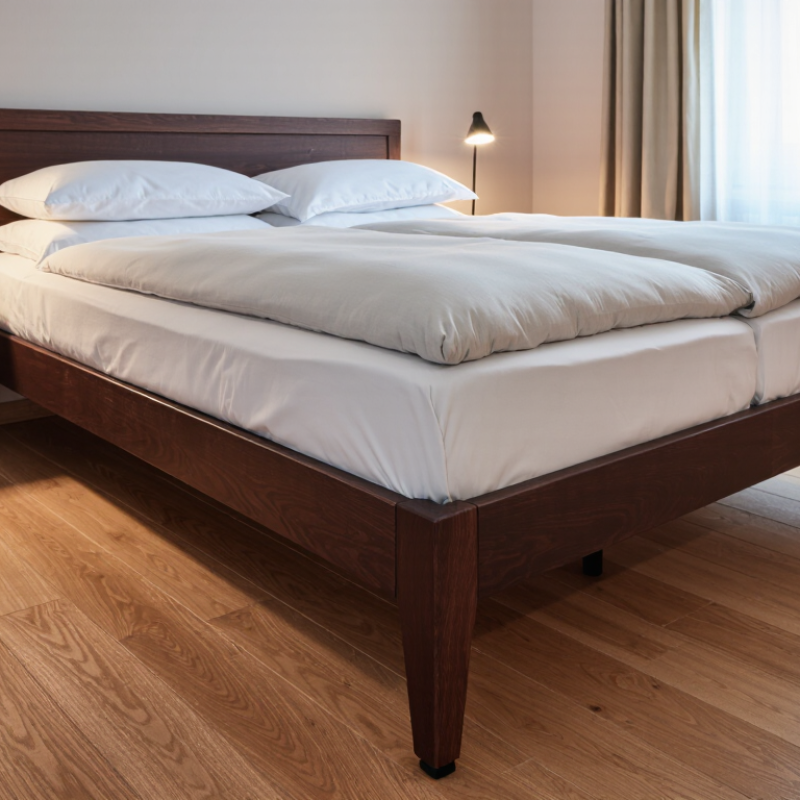
A bed slides when the force from sitting, turning, or pushing exceeds the grip between its feet and the floor. Hardwood’s smooth finish can offer little resistance, especially beneath narrow plastic glides. A thin layer of dust may reduce contact further. The floor may look clean. It may still be slick. ASTM International’s D2047 test uses a static coefficient of friction of 0.5 as a benchmark for certain polished floor surfaces. That figure is not a bed-sliding test, though; it cannot predict how a particular frame will move.
The bed’s design matters, too. Lightweight frames and small feet concentrate pressure on tiny contact areas, while loose joints can turn ordinary movement into a sideways shove. Uneven floorboards may leave one leg barely touching, making the bed rock before it slides. Check the feet and joints, then gently push each corner to find the weak spot. I’ve found that even a sturdy-looking frame can shift when its glides are hard plastic. Felt pads can protect the finish, but soft felt may compress or slide under repeated movement. Rubber cups or grippy, floor-safe pads usually provide more hold; test them in a hidden area, since some materials can mark wood.
A bed can slide because its frame transfers movement unevenly to the floor. Lightweight frames may flex when someone sits on an edge, while loose joints let the legs shift with each turn. Narrow, smooth feet have little contact with hardwood, so even a gentle push can move the bed. A center support that does not touch the floor can also leave the frame rocking. Small gaps matter. Check the legs and connections before assuming the floor is the only cause.
Floor conditions change how much grip the bed has. Dust, polish, or a slick finish can reduce friction, and slightly uneven boards may keep one leg from sitting firmly. A rug can help only if it stays flat and has a suitable non-slip pad underneath; a loose corner may create a new wobble. It is tempting to blame the hardwood, but the frame may be the part that needs attention. Try properly sized rubber or felted-grip cups under each leg, then press gently on different frame corners to check stability. Recheck them after moving the bed. A fix that works on one floor may not work as well on another.
Approximate static-friction ranges for common bed-foot and hardwood-floor interfaces
Higher friction generally means more force is needed to start a bed sliding. Rubber pads often grip better than hard plastic glides; dust, polish, floor finish, and moisture can change the result. These broad, indicative ranges are not product-specific measurements. A wider frame stance can reduce rocking, but grippy pads address sliding directly.
A bed can creep across hardwood when its feet are narrow, smooth, or unevenly loaded. Choosing a non-slip solution starts with checking the frame, not the product label. Look at each foot: is it rubber, metal, or plastic? Measure its width, and note whether the floor has a glossy finish or small gaps between boards.
For slim, hard feet, rubber or silicone grip pads often provide steady contact without bulky hardware. Choose pads wider than the feet, but not so large that they catch when you vacuum. Cup-style protectors can work better for rounded or angled legs because they help keep each foot centered. Heavy frames may need thicker, denser pads; thin foam can flatten and lose grip. Felt protects against scratches, but usually does little to stop sliding. Not the same job.
Clean the floor and the underside of each foot before fitting anything. Dust can make even grippy material slip. Press the bed gently from the side to test it, then check that all legs sit level. If the frame still moves, inspect loose joints or uneven flooring rather than adding more padding. I’ve found that the “strongest” grip is not always best: some adhesives may leave residue or affect a floor finish. Test a small area first, and recheck the pads after a few weeks. They can shift.
A bed can creep across hardwood when smooth feet meet dust, floor polish, or repeated movement. Start by checking whether the frame has wheels; lock them or replace them with stationary feet. Wipe the floor and each foot clean, then let both dry. The National Floor Safety Institute reports that slips and falls account for more than one million emergency-room visits annually. That figure does not measure bed movement, but it shows why a shifting bed near a walking path deserves attention. Keep it simple.
Choose rubber or silicone grippers sized to each leg, not thin felt pads, which are designed to slide more easily. Lift one corner at a time and center a gripper beneath each foot. Press the frame down, then test it with a gentle push from the side. If the legs are narrow, use cup-style grippers to keep them seated. A wall anchor can add restraint: fasten its strap to the bed frame, then attach the other end to a wall stud using suitable hardware. Don’t rely on drywall alone. Not every pad works. Check the floor finish for marks after a few days, and recheck the grippers after moving or cleaning the bed.
| Solution | Why the Bed Slides | Best Suited For | Installation | Floor and Frame Notes | Check and Maintain |
|---|---|---|---|---|---|
| Rubber or silicone bed grippers | Smooth bed feet have little friction against a polished floor. | Minor movement on a clean, level hardwood floor. | Lift each bed leg and center a gripper beneath it. Choose a cup or pad sized to fit the leg securely. | Usually requires no adhesive. Keep the gripper free of dust and grit, which can scratch flooring. | Check that every leg remains centered and that the grippers have not cracked, flattened, or collected debris. |
| Non-slip rubber pads | Small or hard feet may shift when the bed is pushed or moved during use. | Bed frames with flat feet or legs that sit securely on a pad. | Clean and dry the contact areas, then place one pad under each support point. Use adhesive-backed pads only as directed. | Confirm the pad material is suitable for finished floors. Test adhesive on an inconspicuous area before use. | Inspect periodically for slipping, residue, or trapped dirt; replace worn or displaced pads. |
| Felt pads | They can reduce scraping and protect the floor while the bed is repositioned. | Protecting hardwood from scratches when occasional movement is acceptable. | Clean and dry the underside of each leg, then attach a felt pad that fully covers the contact area. | Felt is primarily a floor-protection material, not a high-grip solution; it may not stop a bed from sliding. | Replace felt when it becomes compressed, loose, dirty, or worn through. |
| Leg cups or furniture cups | Rounded or narrow legs can move across the floor under repeated sideways force. | Bed legs that fit fully inside a compatible cup. | Place each cup on a clean, level surface and lower the leg into its center. Check that the leg does not rock. | Select cups with a non-marking base and a size that matches the leg; avoid forcing oversized or undersized parts. | Check alignment after moving the bed and remove dust or grit from beneath the cups. |
| Wall-mounted anti-tip anchor | Repeated movement may occur when the frame is pushed away from the wall; floor pads alone may not control all motion. | Situations where the frame should be restrained from tipping or pulling away from a wall. | Follow the anchor instructions and attach it to a suitable wall structural support and the bed frame. Use appropriate hardware. | An anchor is not a substitute for correctly fitted floor grippers. Do not rely on drywall alone unless the anchor is specifically designed for it. | Check connections regularly and after moving the bed. If unsure about wall construction or hardware, consult a qualified installer. |
| Adjustable frame feet or replacement glides | Uneven floors, loose feet, or mismatched supports can cause rocking and make sliding more likely. | Beds with loose, worn, or unevenly contacting feet. | Tighten loose fittings and adjust the feet according to the frame instructions. Add compatible non-slip pads if needed. | Keep all intended support points in contact with the floor; avoid improvised shims that can shift or damage the finish. | Recheck stability after adjustment and make sure the frame remains level and its joints are secure. |
Before installing: Move the bed aside and clean the floor and feet with a finish-safe method. Remove grit, confirm the frame is assembled tightly, and test any new product on a discreet area of the floor.
A bed that shifts on hardwood often has one foot carrying less weight than the others. Check each corner by pressing down gently; rocking can reveal an uneven leg, loose joint, or warped floorboard. Look beneath the frame for cracked slats and loose bolts, too. Small gaps matter. Tighten fasteners with the correct tool, but stop if a joint feels stripped or the frame is damaged. A level can help, though a thick rug may hide an uneven floor rather than fix it.
Clean dust and grit from the bed feet and floor, since even a thin layer can reduce grip. For smooth wood, try non-slip furniture pads sized to each foot; felt pads protect the finish but may not prevent sliding. Avoid adhesive products unless their instructions say they are safe for finished hardwood. Lift the bed with help instead of dragging it, then test it with a gentle push from different sides. Check the pads again after a few days and whenever you move the bed. They compress. I sometimes overlook that. If the bed still shifts, check whether the frame is assembled squarely and whether the mattress is centered; a heavy mattress can pull an unstable frame off balance.
Smooth floors, dust, and hard plastic feet reduce grip. Sitting down or turning can push the frame sideways.
Yes. A thin layer beneath a foot can reduce contact, even when the floor looks clean. It happens.
Usually not. Felt helps protect the finish from scratches, but it may compress or slide with repeated movement.
Rubber or silicone pads wider than each foot often improve grip. Avoid oversized pads that catch while vacuuming.
Use them for rounded or angled feet. The cup helps keep each leg centered.
Clean and dry the floor and feet. Lift one corner at a time, center a gripper, then gently push the frame to test it.
Check loose joints, wheels, and uneven floorboards. One leg may barely touch the floor. More padding may not solve it.
Yes. Attach its strap to the bed frame and secure the other end to a wall stud with suitable hardware. Drywall alone is not enough.
Check them after a few days, after cleaning, and after moving the bed. Pads can shift or mark the floor, so test a hidden spot first.
Beds can slide on hardwood floors because smooth surfaces offer little friction, especially when a frame has narrow feet, uneven weight distribution, or loose joints. Movement may also increase when people shift during sleep or when the floor is dusty or polished. Understanding how the bed frame’s design and the condition of the floor affect stability can help identify the cause before choosing a solution.
How to prevent a bed frame from sliding on hardwood floors depends on its feet, weight, and how much movement needs to be reduced. Non-slip bed grippers, protective pads, or floor-safe anchors can add traction or limit shifting; choose an option that fits the frame and will not scratch the floor. Install each piece securely beneath the contact points, then test the bed with gentle pressure. Check periodically for worn pads, loose connections, and changes in stability, and adjust or replace parts when needed.

Q-Flow Home