A bedroom without a closet can quickly become crowded, especially when coats, shoes, and folded clothes compete for limited floor space. I have seen a single chair disappear beneath laundry within days. That situation feels frustrating, but it is not impossible to fix. With careful planning, ordinary furniture, and a few space-saving tools, you can create a practical clothing system.
The key question is: How to maximize clothes storage in a bedroom without a closet? The answer begins with using overlooked areas, including walls, doors, under-bed space, and empty corners. A sturdy clothing rack can hold daily outfits, while slim drawers can organize folded shirts and accessories. Fabric bins may protect seasonal clothing from dust, although cheap materials sometimes collapse under heavy items. Measure every area before buying storage. Small mistakes matter.
This guide explores seven realistic ways to increase clothing storage without making the room feel like a warehouse. Each method focuses on accessibility, stability, and everyday use. You will find ideas for hanging clothes, storing shoes, rotating seasonal items, and reducing visual clutter. Some solutions may work better than others in your bedroom. That is normal. Storage habits differ, and even a well-designed system may need adjustment after a week. The goal is not perfect organization. It is a room where clothes stay visible, reachable, and reasonably easy to put away.
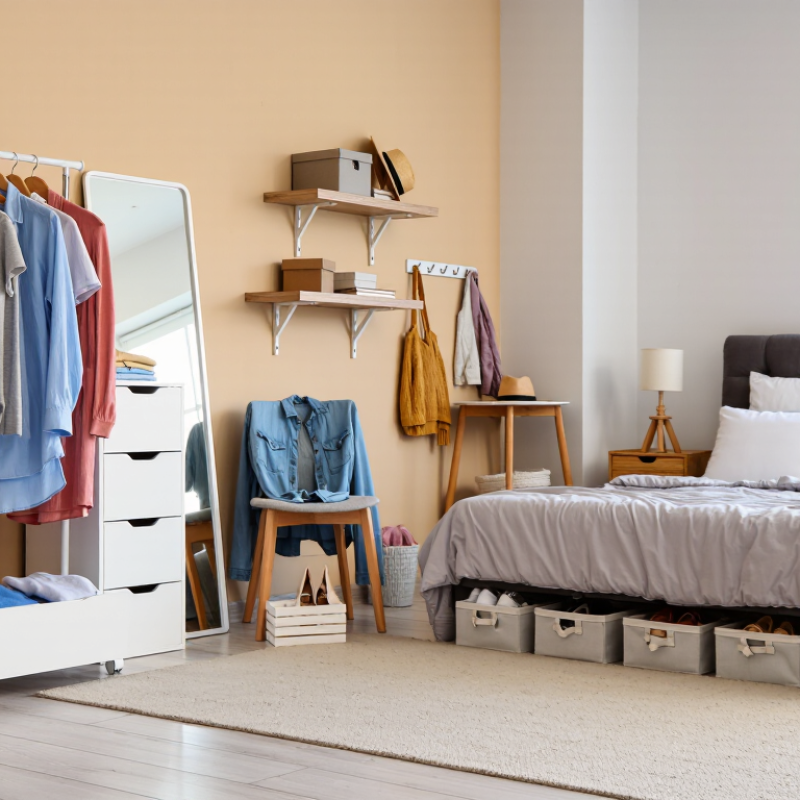
Before choosing a storage solution, assess the room itself. Measure wall width, ceiling height, floor depth, and door clearance. Mark windows, vents, outlets, and walking paths on paper. A tall rack may fit beside a bed, but it can block light or make dressing awkward. Keep frequently used items within easy reach. Store seasonal clothing higher, only if you can access it safely.
Your wardrobe needs an honest audit, too. Remove damaged pieces and group clothing by type, season, and use. Count coats, shoes, folded items, and hanging garments. Notice your laundry habits. If you wash clothes weekly, you need a practical place for worn items, not just clean storage. I have seen people buy more shelves when the real problem was keeping too many “maybe” clothes. That mistake wastes space and money.
Tips: Measure twice. Leave a small air gap around stored clothing to reduce crowding and improve airflow. Use slim hangers, under-bed boxes, or a narrow garment rack when suitable. Heavy coats need strong supports, while delicate fabrics need protection from dust and direct sunlight. Test one storage zone for a week before expanding it. It may look efficient but feel inconvenient in daily use.
When a room has no closet, look upward before buying more furniture. Vertical storage can turn an empty wall into a practical wardrobe system. Install sturdy shelves above eye level for folded sweaters, bags, and seasonal shoes. Keep daily clothing between waist and shoulder height. This reduces bending and makes morning routines faster. A narrow rail under a shelf can hold shirts, skirts, or jackets without using floor space. Measure the wall carefully first. I once placed a rail too low, and longer coats dragged across the floor.
Hanging organizers add useful layers to unused vertical areas. Fabric compartments can store scarves, belts, socks, and small accessories. Choose shelves with firm supports, especially for heavier clothing. Wall anchors should match the wall material and the storage load. Do not trust appearance alone. A beautiful shelf may still sag when packed. Leave a little breathing room between items, because crowded storage becomes difficult to maintain and inspect.
Tips: Group clothing by use, not only by color. Keep workwear near the rail and occasional items higher up. Label closed boxes with simple descriptions. Test every shelf with a small load before filling it. If the arrangement feels awkward after one week, adjust it rather than forcing the habit.
Seasonal clothing can disappear beneath your bed when storage space is limited. Measure the clearance first, then choose shallow containers that slide out easily. Fabric boxes work well for sweaters, scarves, and lightweight jackets. For better protection, use containers with secure lids, but avoid sealing damp clothing inside.
I once stored winter coats under a bed without checking them for moisture. They developed a stale smell after several weeks. Now, I wash and dry every item completely before packing it. I also add a simple label, such as “cold weather” or “rain gear,” and leave a little space inside each container. Clothes need room to breathe.
Hidden storage can handle the pieces you use less often. A storage bench can hold folded trousers, while a lidded ottoman can hide gloves and hats. Behind a curtain, a low shelf can keep clothing out of sight without making the room feel crowded. Empty suitcases can store seasonal items too, although heavy clothing may make them difficult to move. Keep containers away from heaters and check them every few months for odors, insects, or moisture. This routine takes time. It is easy to skip.
When a room has no closet, flexible furniture can create storage without making the space feel crowded. Choose pieces with built-in clothing compartments, such as a storage bed, lift-top bench, or tall cabinet. A bed with deep drawers can hold folded shirts, blankets, and seasonal clothing. A bench near the wall can store shoes and bags while providing a place to sit.
Look for adjustable shelves, removable dividers, and smooth casters. These details let furniture change as your wardrobe changes. A narrow dresser works well beside a doorway, while a clothing rack with lower drawers can separate daily outfits from accessories. A room divider with enclosed compartments can also define a sleeping area and hide less tidy items. Measure every corner first. Furniture that looks compact online may feel bulky in a small room.
Tips: Keep daily clothing at waist height for easy access. Store rarely used items in higher compartments. Use fabric boxes to prevent small items from spreading across drawers. Leave a few centimeters around moving doors and drawers. I once chose a cabinet with beautiful shelves but poor depth, so folded clothes kept falling forward. That mistake taught me to test compartment dimensions with real garments, not assumptions. Flexible storage should support your routine, not force you to redesign it every morning.
| Best Way | Flexible Furniture | Built-In Clothing Compartment | Typical Size | Suitable Clothing | Practical Storage Benefit | Organization Tip |
|---|---|---|---|---|---|---|
| 1 Use a wardrobe cabinet | Freestanding wardrobe or armoire | Full-height hanging rail with lower drawers or shelves | 90–120 cm wide 50–65 cm deep 180–210 cm high |
Dresses, shirts, trousers, jackets, and seasonal garments | Provides closet-style hanging storage while remaining movable and suitable for rental homes. | Keep frequently worn clothing at eye level and reserve the upper shelf for bags or seasonal items. |
| 2 Choose a storage bed | Platform bed with drawers or lift-up base | Under-bed drawers or a full storage compartment beneath the mattress | Common mattress widths: 90, 140, or 160 cm Storage height: about 20–35 cm |
Folded T-shirts, knitwear, jeans, bedding, and off-season clothes | Uses otherwise wasted floor space and keeps bulky textiles out of sight. | Place clothes in labeled fabric boxes or zippered bags to reduce dust and simplify seasonal changes. |
| 3 Add a clothing bench | Storage bench or upholstered window seat | Lift-up seat or front-access drawers | 90–150 cm wide 35–45 cm deep 40–50 cm high |
Shoes, folded casual clothing, accessories, and small linens | Combines seating with concealed storage and works well at the foot of a bed or beneath a window. | Use separate compartments for footwear, daily accessories, and folded clothing to prevent mixing. |
| 4 Install a modular cube unit | Stackable cubby shelving or modular storage grid | Open cubes, fabric bins, and optional hanging sections | Each cube is commonly about 30–40 cm wide and high Depth: about 30–40 cm |
Sweaters, folded tops, bags, hats, socks, and accessories | Can be expanded, rearranged, or separated into multiple areas as storage needs change. | Assign one cube to each clothing category and use matching bins for a cleaner appearance. |
| 5 Use a rolling garment rack | Wheeled clothing rack with shelf or lower tray | Open hanging rail with a bottom shelf or shoe compartment | 80–120 cm wide 40–55 cm deep 150–180 cm high |
Frequently worn shirts, coats, trousers, uniforms, and dresses | Offers immediate access and can be moved for cleaning, room reconfiguration, or better light. | Limit the rail to current-season clothing and use slim, uniform hangers to conserve horizontal space. |
| 6 Select a storage ottoman | Lift-top ottoman or compact storage stool | Hinged interior compartment | 60–120 cm wide 40–50 cm deep 40–50 cm high |
Scarves, activewear, sleepwear, small bags, and accessories | Adds flexible seating while filling unused space beside a bed, sofa, or entryway. | Use small pouches or dividers inside the compartment so lightweight items remain easy to find. |
| 7 Combine a room divider with storage | Open shelving divider with integrated drawers or hanging section | Back-to-back shelves, drawers, and a partial hanging rail | 90–180 cm wide 30–50 cm deep 150–200 cm high |
Folded clothing, baskets, handbags, and selected hanging garments | Creates a visual dressing zone without permanent construction and separates sleeping or work areas. | Keep heavy items in lower compartments and anchor tall units to the wall to reduce tip-over risk. |
A closet-free clothing system works best when every item has a visible home. I learned this after storing shirts in three different rooms. Divide storage by use: daily clothes, workwear, sleepwear, and seasonal pieces. Use slim drawers, open cubes, or a sturdy garment rack. Fold soft items vertically, so one shirt does not hide another. Hang jackets and delicate clothes on strong, evenly spaced hangers. Leave a little air between garments.
Labels make the system easier to trust. Mark each bin by category and season, such as “winter knits” or “summer shorts.” Keep labels large and readable from standing height. Clear containers help, but opaque bins can protect light-sensitive fabrics. Add a small inventory note inside each container. It prevents unnecessary purchases and makes forgotten clothes easier to find. Hooks near the entry can hold tomorrow’s outfit. Small changes matter.
Maintenance needs a simple rhythm. Return clothes after washing, and repair loose buttons before they become larger problems. Review each storage zone every month. Remove items that no longer fit, feel uncomfortable, or remain untouched. Be honest here. A beautiful system can still fail when it holds too much. I sometimes label a box too broadly, then forget what it contains. Rechecking labels solves that weakness. Keep one empty bin available for seasonal rotation, laundry overflow, or unexpected changes. Five minutes of resetting each evening usually protects the whole arrangement.
Measure wall width, ceiling height, floor depth, and door clearance. Mark windows, vents, outlets, and walking paths.
Count coats, shoes, folded items, and hanging garments. Group them by type, season, and frequency of use.
Remove damaged pieces and review “maybe” items honestly. Keeping every uncertain garment can waste valuable space.
Keep daily clothing between waist and shoulder height. This makes dressing easier and reduces unnecessary bending.
Use sturdy shelves, rails, and hanging organizers on open walls. A narrow rail can hold shirts, skirts, or jackets.
Place seasonal items higher or inside labeled boxes. Check that you can reach them safely before using high storage.
Leave a small air gap around garments. Use slim hangers, under-bed boxes, and separate space for worn laundry.
Fill one storage zone lightly and use it for a week. If it feels awkward, change the layout instead of forcing it.
Match wall anchors to the wall material and storage load. Test shelves with a small load before filling them.
Do not add shelves automatically. The real issue may be too many clothes, poor grouping, or no laundry space.
Maximizing clothing storage without a closet starts with assessing your available space, wardrobe size, and daily storage needs. The key to learning how to maximize clothes storage in a bedroom without a closet is to use every area thoughtfully. Install shelves, rails, and hanging organizers on walls or behind doors to create vertical storage while keeping frequently worn items accessible. Under-bed containers, storage benches, and discreet hidden compartments are useful for seasonal clothing, shoes, and accessories that are not needed every day.
Flexible furniture can provide additional capacity without making the room feel crowded. Choose pieces with built-in drawers, shelves, or clothing compartments, and consider movable racks that can adapt as your needs change. Finally, organize clothing by category, season, or frequency of use, then label containers for quick identification. Regularly folding, rotating, and reviewing your wardrobe will help maintain an efficient, tidy, and practical closet-free storage system.

Q-Flow Home