Choosing a dining table for a small home is less about fashion than movement, proportion, and daily comfort. In 2026, compact dining areas favor shapes that soften corners, improve circulation, and support flexible seating. However, one popular shape cannot suit every floor plan. What type of dining table shape is best for small spaces depends on room width, doorway placement, chair clearance, and table usage. A design that looks compact online may feel crowded beside a kitchen island.
This guide compares round, oval, square, and narrow rectangular tables through practical design principles. Round tables remove sharp corners and make conversation easier, especially in apartments with tight walking paths. Oval tables offer similar circulation with more usable length. Square tables can fit neatly into a corner, although four chair backs may quickly block movement. Slim rectangular designs work well in long rooms, but they need careful clearance at both ends. Measure the occupied space, not only the tabletop.
Reliable planning includes the table, chairs, pulled-out chair depth, and a comfortable passage behind each seat. Around 36 inches of clearance is a useful starting point, though real homes may require compromise. I have seen layouts fail because a radiator, cabinet handle, or open drawer was ignored. Small details matter. The best choice preserves movement while matching your habits, storage needs, and visual preferences. This article weighs each shape’s strengths and weaknesses without pretending one answer works everywhere. Maybe that is the honest answer.
What Makes a Dining Table Shape Ideal for Small Spaces in 2026?
2026 Top Dining Table Shape for Small Spaces?
What makes a dining table ideal for a small space in 2026? The answer is not simply “round.” Shape must protect movement, seating comfort, and visual openness.
The National Association of Home Builders reported that the median new single-family home size fell from 2,687 square feet in 2015 to 2,411 square feet in 2023. That shift makes flexible dining furniture more relevant. Measure the pinch points. A table should usually leave about 36 inches for comfortable circulation, based on common residential planning guidance.
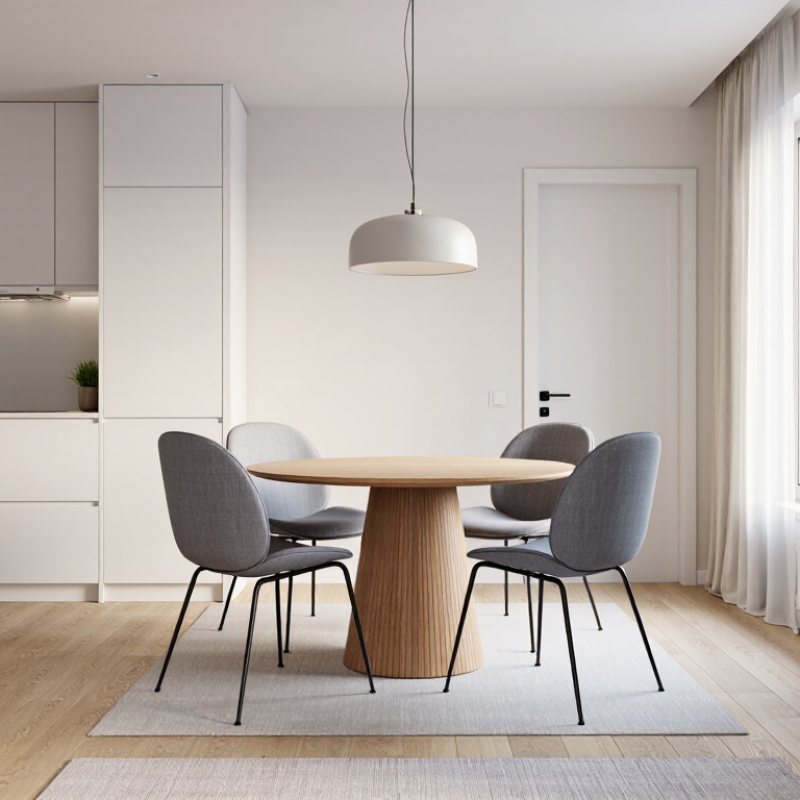
Round and oval tables often perform well because they remove sharp corners near narrow walkways. A 42-inch round table can seat four people without creating a heavy visual block.
An oval version offers similar flow but provides more usable surface for serving dishes. Pedestal bases also improve legroom, especially when chairs need to slide into tight positions.
However, a round table is not always best. It can waste wall space in a long, narrow room.
The 2024 American Housing Survey continues to document varied household layouts and compact urban living conditions, reinforcing the need for adaptable furniture choices. Drop-leaf, extendable, and nesting designs can support daily meals without occupying the entire room.
I would test chair clearance with real plates, not just a floor plan. That small detail is easy to miss. Material and color matter too. Light-toned wood, slim edges, and one central base can make a table feel less crowded, although personal taste still changes the result.
How Room Layout and Seating Needs Affect Table Shape Selection
2026 Top Dining Table Shape for Small Spaces?
How Room Layout and Seating Needs Affect Table Shape Selection
Choosing a dining table for a small room starts with movement, not fashion. Measure the room, door swing, radiator, and nearby storage before selecting a shape. Leave about 36 inches for comfortable circulation when possible. A beautiful table can still feel wrong if chairs block the main walkway.
Round tables often soften tight layouts because they have no sharp corners. They also support conversation between four diners and work well in square rooms. A pedestal base gives legs more freedom. However, round tables may waste wall space in narrow rooms. They can also feel crowded when more than four people sit down.
Rectangular tables suit long rooms and can sit close to a wall during daily use. Pulling them outward creates extra seating for guests. A slim table may provide better clearance than a wide one. Square tables fit balanced rooms, but their corners need careful planning near doors.
I recommend marking the tabletop on the floor with tape first. Sit in every chair position. It feels simple, but it reveals problems quickly. My first choice is often a compact round table, yet the room’s traffic pattern should overrule that preference. Seating needs can change, too. A household with children may value flexible benches, while frequent hosts need accessible end seats and stronger circulation space.
Comparing Round, Square, Rectangular, and Oval Dining Tables
2026 Top Dining Table Shape for Small Spaces?
Comparing Round, Square, Rectangular, and Oval Dining Tables
In a small dining area, table shape affects more than appearance. It controls walking space, chair placement, and daily comfort. I measure the room with chairs pulled out, not pushed in. That simple test often changes my choice. Round tables remove sharp corners and create an easy conversation circle. A 36- to 42-inch diameter usually seats two to four people comfortably. They work well beside a narrow kitchen path. Yet the base matters. Four legs can trap knees and make small spaces feel crowded.
Square tables suit nearly square rooms and compact breakfast corners. Each seat feels equal, but four diners may sit close together. A 32- to 36-inch square can work for two or four people. Rectangular tables use wall length efficiently. Their straight edges support benches and can double as work surfaces. However, they need clearer passage at both ends. I have seen a table look perfect on paper, then block a cabinet when one chair moves.
Oval tables offer rectangular capacity with softer corners. They help when a walkway passes near one end. Their curved edges reduce bumps, but the wider middle still needs breathing room. Extendable models add flexibility, though the leaves require storage. My first choice is not always right. Measure doorways, baseboards, and lighting before buying. A 30-inch passage can disappear quickly.
2026 Top Dining Table Shape for Small Spaces
Estimated floor area required for a compact four-person dining table, including a standard 36-inch circulation clearance on every side. Smaller values indicate more efficient use of floor space. The comparison uses common planning dimensions: 42-inch round, 36-inch square, and 48 × 30-inch rectangular and oval tables.
Choosing the Best Table Shape for Your Available Space
Choosing the Best Table Shape for Your Available Space
For small rooms, table shape matters more than surface area alone. In 2026, round dining tables remain a practical choice for many compact homes. Their curved edges improve movement and remove sharp corners near busy walkways. They also encourage conversation because every seat stays relatively close. A pedestal base usually works better than four legs. That small detail changes legroom.
A square table suits a compact, balanced room. Place it near a wall when daily space is limited, then pull it outward during meals. However, square corners can interrupt narrow routes. Measure the clearance between the table edge, walls, and nearby furniture. Leave about 90 centimeters for comfortable chair movement when possible. Chairs need room too. A slim rectangular table may suit longer rooms better. An extendable version can serve guests without occupying extra space every day. Yet extensions require storage, which people often overlook.
Before buying, mark the proposed tabletop on the floor with painter’s tape. Use real chair dimensions, not estimated ones. Sit down, pull each chair back, and walk around the taped outline. This simple test reveals awkward pressure points quickly. I have found that measurements alone can feel reassuring but still miss real household habits. A round table may feel friendly, while a narrow rectangle may provide better wall clearance. Recheck the walkway during morning routines. The best shape depends on how your room actually behaves.
Space-Saving Features to Consider in a Small Dining Area
2026 Top Dining Table Shape for Small Spaces?
A round pedestal table remains a strong choice for compact dining areas. Its central base lets chairs slide closer without fighting corner legs. This matters in narrow apartments. I once chose a beautiful four-leg table, and every chair caught a leg. It looked spacious in the showroom, not at home.
The U.S. Census Bureau’s 2023 American Community Survey reports that one-person households represent about 29% of U.S. households. Smaller homes need furniture that works harder.
Choose a table with a drop-leaf or extension mechanism for occasional guests. Keep roughly 36 inches behind frequently used chairs, following common kitchen-planning guidance from the National Kitchen and Bath Association. Measure the chair depth, not only the tabletop.
Look for rounded edges, slim profiles, and a pedestal placed safely near the center. An oval tabletop can preserve the soft movement of a round table while offering more serving space.
Storage deserves attention too. A nesting bench can slide beneath the table, although it may feel less comfortable during long meals.
The 2024 Design Trends Report from the National Kitchen & Bath Association continues to identify multifunctional planning as an important design direction. Still, flexibility has limits. Folding parts can loosen, and a very small tabletop becomes frustrating quickly. Leave enough surface for plates, glasses, and one shared dish. Barely fitting is not efficient.
Conclusion
Choosing the right dining table shape can make a small space feel more open, comfortable, and practical in 2026. What type of dining table shape is best for small spaces depends on the room’s layout, walking paths, and seating needs. Round and oval tables are often ideal for compact areas because their curved edges improve movement and create a more flexible seating arrangement. Square tables can work well in rooms with balanced proportions, while rectangular tables may be suitable for narrow spaces or households that need more seating.
Before selecting a shape, measure the available area and leave enough clearance for chairs and movement. Consider space-saving features such as drop-leaf extensions, folding sections, nesting seating, slim legs, and built-in storage. The best table is one that fits the room without blocking doorways or circulation while still supporting everyday meals and occasional gatherings. By matching the table shape to the room’s dimensions and lifestyle, even a limited dining area can remain functional, inviting, and visually uncluttered.

 Q-Flow Home